

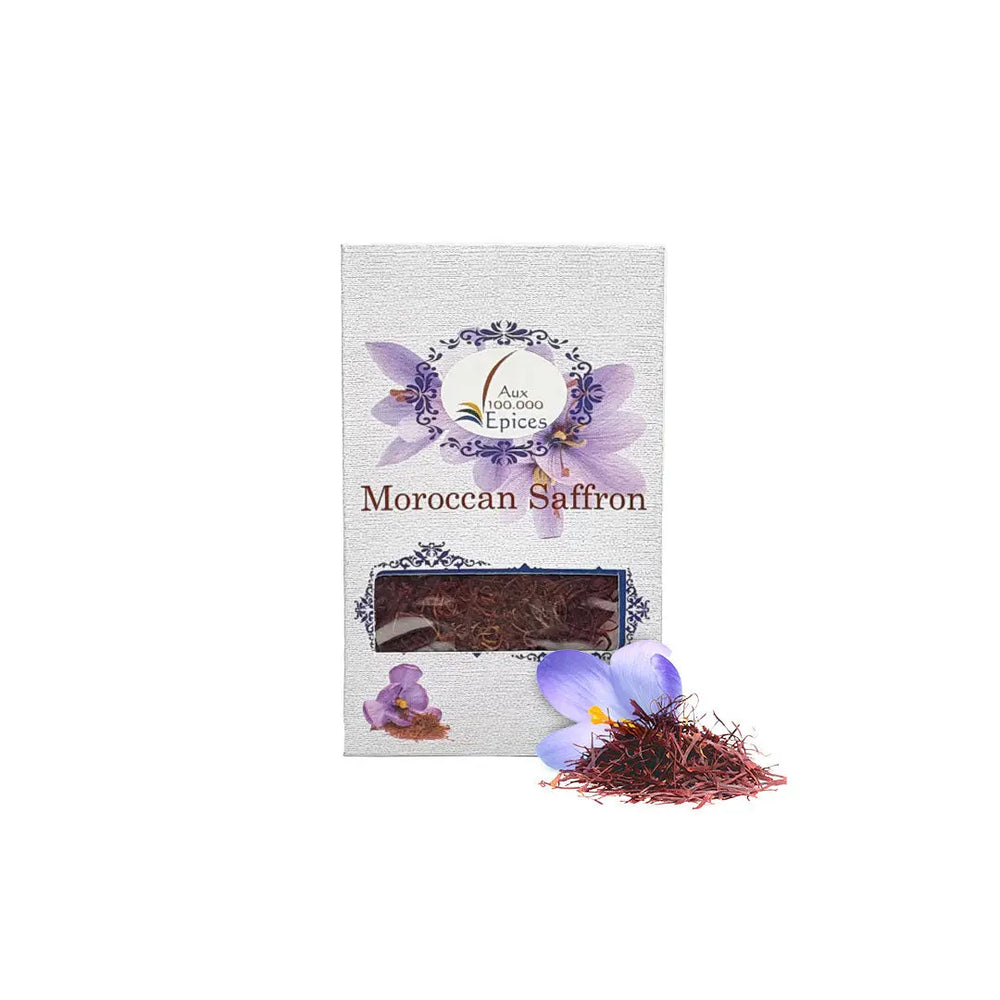
Moroccan Saffron — Premium Grade from Taliouine
Morocco's Taliouine valley — a high-altitude pocket of the Anti-Atlas mountains — produces what many chefs and...
Subtotal:
$24.00
Morocco's Taliouine valley — a high-altitude pocket of the Anti-Atlas mountains — produces what many chefs and spice merchants consider the world's finest saffron. The combination of intense sun, thin mountain air, and cold nights forces the Crocus sativus to produce dense, resinous stigmas with a deeper colour and more complex aroma than saffron grown at lower elevations. The harvest window is just two to three weeks in October, picked by hand before sunrise when the flowers are still closed.
Moroccan Saffron vs Spanish Saffron
Spanish saffron is widely available and reliably good. Iranian saffron dominates global volume. Taliouine saffron is produced on a smaller scale with a higher concentration of crocin — the compound responsible for colour — and safranal, which gives saffron its distinctive floral, slightly medicinal aroma. The threads are darker red, the flavour cleaner, and the colour yield noticeably stronger per gram.
How to Use Moroccan Saffron
Use 3–5 threads per serving. Always bloom saffron before cooking: steep the threads in 2–3 tablespoons of warm (not boiling) water or milk for 15–20 minutes. Add the bloomed liquid and threads together. This releases the crocin and safranal and distributes colour and flavour evenly through the dish.
Essential in: Moroccan chicken tagine with preserved lemon, harira soup, saffron rice, seafood bastilla, and Moroccan mrouzia (lamb with honey and almonds).
How to Test for Authenticity
Place a few threads in cold water. Real saffron releases colour slowly over several minutes, turning the water deep golden-yellow while the threads themselves stay red. Fake saffron bleaches immediately and turns the water an artificial orange-red.
Storage
Airtight container, away from light and heat. Saffron does not spoil but loses potency after 12–18 months. Buy small, use regularly, and store properly — this is how Moroccan cooks have always handled it.


Related Products
Recently Viewed Products
- Choosing a selection results in a full page refresh.