

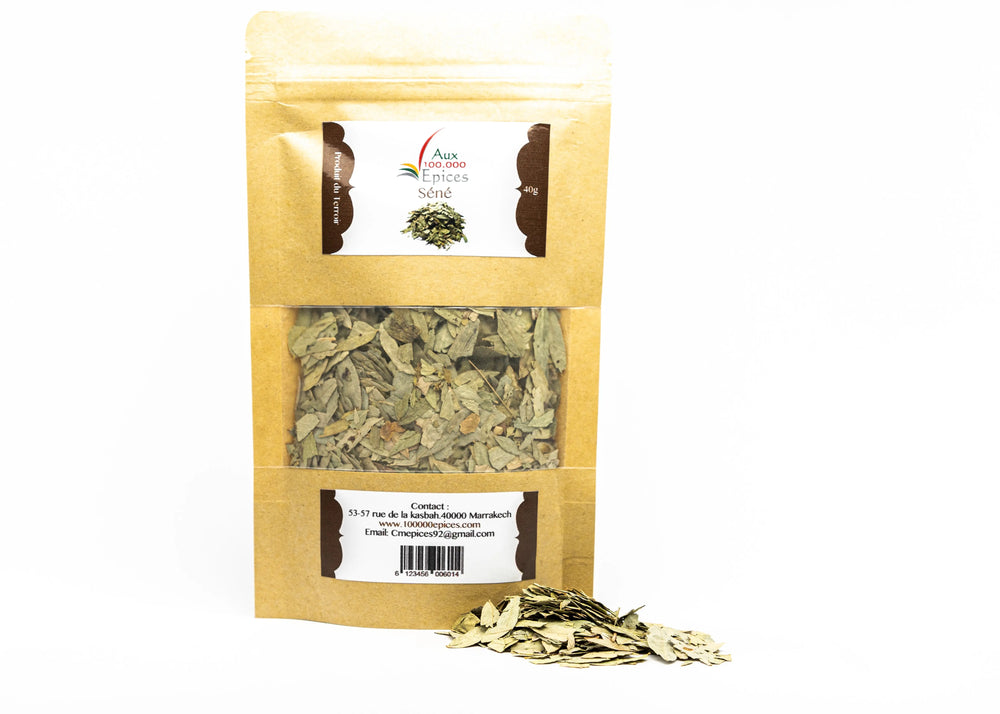
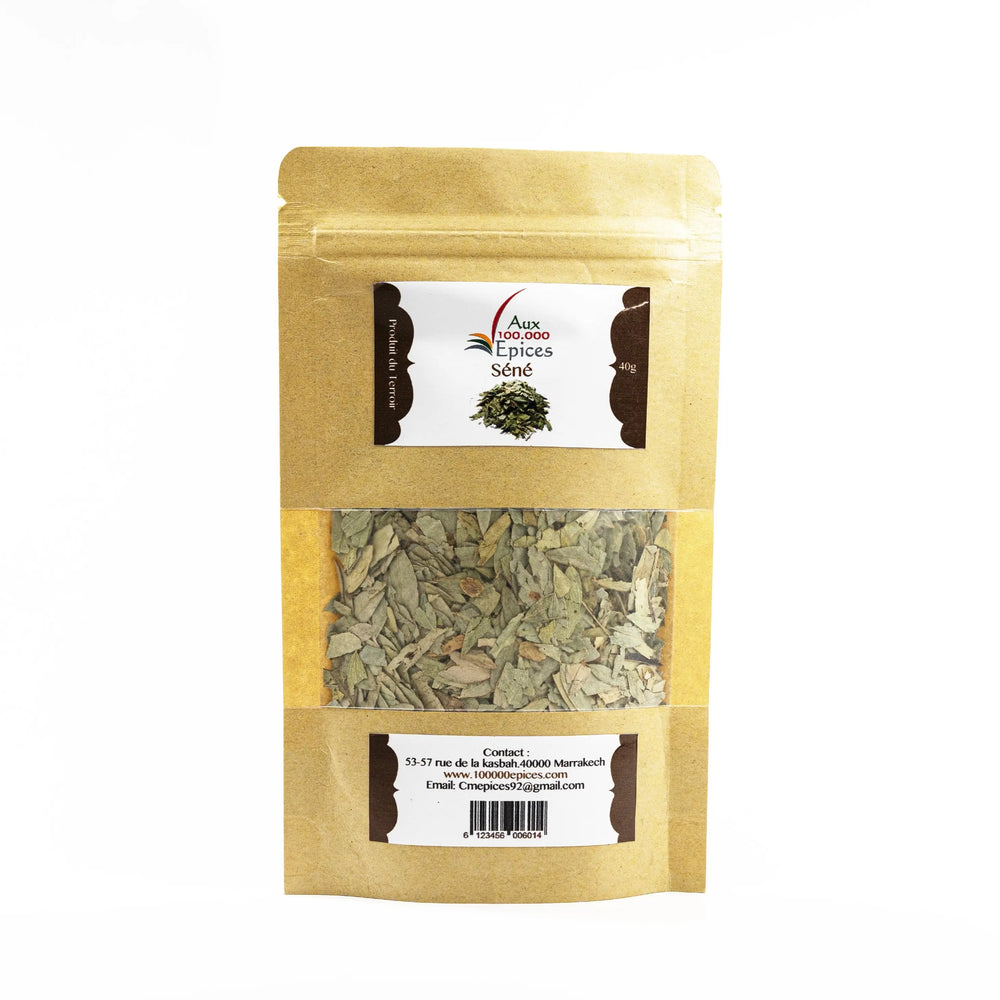
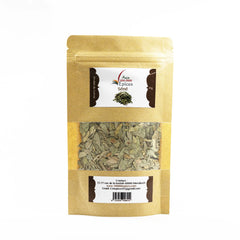
Senna Leaf - 40g
Senna leaf — known in Morocco as séné and used across the Arab world for over a...
Subtotal:
$7.00
Senna leaf — known in Morocco as séné and used across the Arab world for over a thousand years — is one of the most widely trusted herbal remedies in traditional medicine. It is the plant that Moroccan grandmothers kept in the kitchen cabinet, the one prescribed in the ancient texts of Islamic herbal medicine, the one that modern pharmacology has studied and validated for a very specific and well-understood use: gentle, effective relief from occasional constipation.
At 100.000 Épices, we have stocked dried senna leaves since the beginning. It is a staple of the Moroccan traditional pharmacy — available in every herbalist shop in the medina of Marrakech — and one of the products our customers ask for specifically, often because they used it growing up and want to find a reliable source outside Morocco.
What Is Senna Leaf?
Senna (Cassia senna, also known as Senna alexandrina) is a shrub native to North Africa and the Arabian Peninsula. The leaves are harvested, dried, and used as a herbal remedy — primarily for their natural laxative effect, which comes from compounds called sennosides that stimulate bowel movement.
It has been used in traditional medicine for over 1,000 years, documented in classical Islamic medical texts by scholars including Ibn Sina (Avicenna). It is one of the few traditional herbal remedies that has also been thoroughly validated by modern clinical research. The World Health Organization and pharmacopeias in numerous countries recognize senna as an effective short-term treatment for constipation.
In Moroccan traditional medicine, senna leaf is a cleansing plant — used for what practitioners call "internal cleansing" or "purification," typically as a tea or infusion prepared at home.
How to Prepare Senna Leaf Tea
The most common traditional Moroccan preparation is a simple infusion:
Standard infusion (serves 1): Place 1 to 2 teaspoons (approximately 1 to 2 grams) of dried senna leaves in a cup. Pour 200ml of water that has just come off the boil (not at a full rolling boil). Steep for 10 minutes. Strain and drink. Do not steep longer than 15 minutes — longer infusion times increase the potency significantly.
With honey and ginger: The traditional Moroccan way to make senna tea more palatable is to add a teaspoon of honey and a small slice of fresh ginger to the infusion. This also helps with any mild cramping that can occur.
When to drink it: Traditionally taken in the evening, with effects typically occurring 6 to 12 hours later. Most people take senna leaf at night and experience the effect the following morning.
Benefits of Senna Leaf in Traditional Moroccan Herbal Medicine
Digestive cleansing: The primary and well-documented use. Senna leaf is effective for occasional constipation and is used traditionally as a gentle intestinal cleanser before fasting periods or after rich celebration meals.
Seasonal detox: In Moroccan herbal tradition, senna is used as part of seasonal cleansing practices — particularly before Ramadan as a preparatory cleanse.
Post-celebration digestion: After heavy feasts (weddings, Eid), senna tea is a traditional household remedy to restore digestive comfort.
Dosage and Safety
Senna leaf is a potent plant. It should be used with care and not taken daily or for extended periods.
Recommended dose: 1 to 2 grams of dried leaves per day (roughly 1 to 2 teaspoons). This is the dose range validated in clinical studies and consistent with traditional use.
Duration: Do not use senna for more than 7 to 10 consecutive days without medical advice. It is intended for occasional use, not as a daily supplement.
Who should avoid it: Senna is not recommended for children under 12, during pregnancy, while breastfeeding, or for people with inflammatory bowel conditions, intestinal obstruction, or chronic gastrointestinal issues. If you are taking medications, consult a healthcare professional before use.
Possible side effects: Mild abdominal cramping is common, particularly with higher doses. This is normal and typically mild. Reducing the dose usually resolves it. Prolonged overuse can lead to electrolyte imbalance — this is why short-term, occasional use is the correct approach.
Senna Leaf in Moroccan Tradition
Walk into any traditional herbalist shop in the medina of Marrakech — the apothecaries that line the souks — and you will find senna leaf displayed openly alongside other medicinal plants: dried, loose, available by weight. It is considered a basic, essential plant medicine in Moroccan culture.
The knowledge of how to use it is passed through families. Grandmothers know the dose. The preparation is simple. The plant has been in continuous use in this part of the world for so long that it is simply part of the herbal vocabulary — the same way a European household reaches for chamomile or peppermint, a Moroccan household reaches for senna leaf when digestive support is needed.
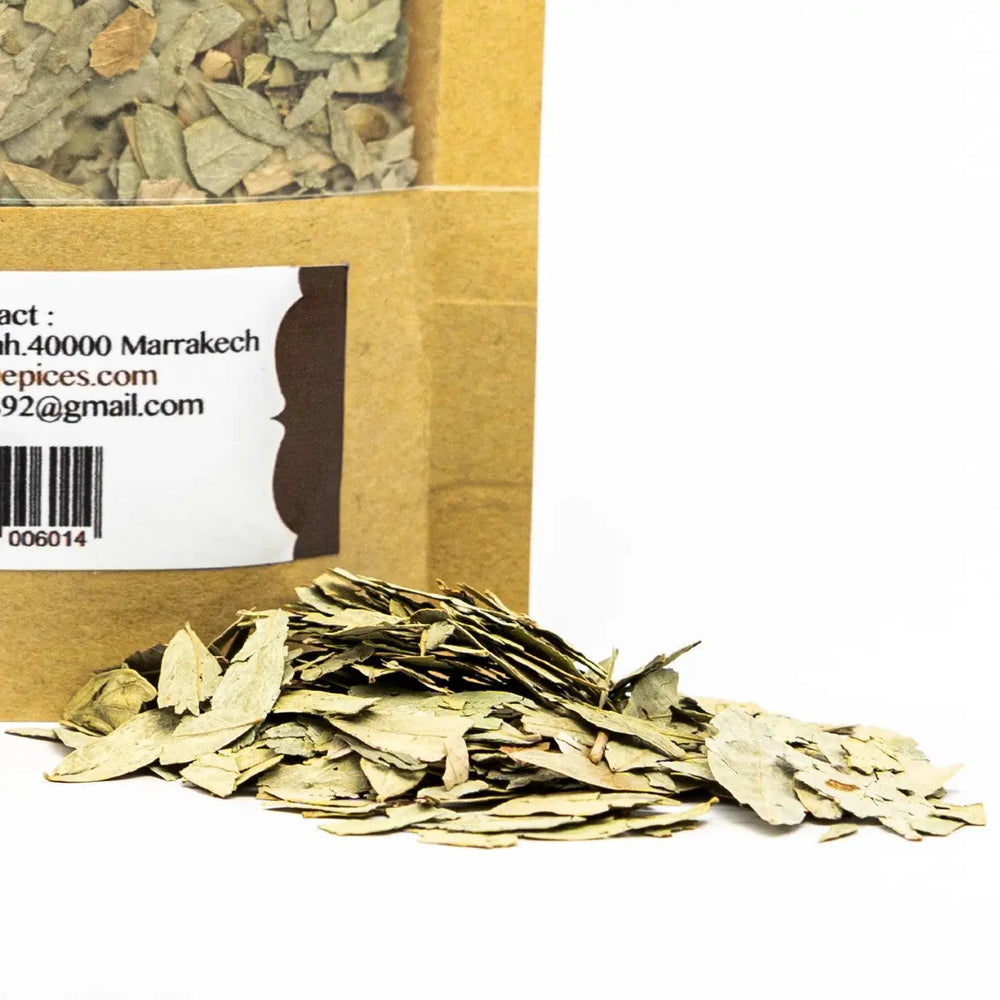
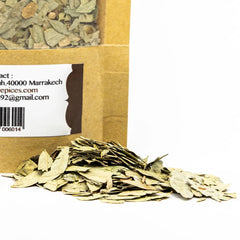
Our dried senna leaves are sourced from suppliers who have been providing Moroccan herbalists for decades. They are dried whole leaves — not powder, not extract — which allows you to control your dose precisely and prepare the tea exactly as the tradition requires.
Frequently Asked Questions
How quickly does senna leaf work? Typically 6 to 12 hours after taking the infusion. Most people drink it in the evening and experience the effect the following morning.
Can I take senna leaf every day? No. Senna leaf is for occasional use only — ideally no more than a few days at a time, and not exceeding 7 to 10 days consecutively. Regular daily use can reduce effectiveness and cause the digestive system to become dependent on stimulant laxatives.
Is senna leaf safe? When used as directed — in the correct dose, for a short duration — senna leaf is considered safe for adults. It has been used in traditional medicine for over a thousand years and is approved by health authorities in many countries as an over-the-counter treatment for constipation.
What is the difference between senna leaves and senna pods? Both come from the same plant and contain the same active compounds (sennosides). Senna leaves are typically considered slightly milder than the pods. At 100.000 Épices, we supply the dried leaves.
How should I store dried senna leaves? Keep in an airtight container away from moisture, heat, and direct sunlight. Stored correctly, dried senna leaves retain potency for 18 to 24 months.


Related Products
Recently Viewed Products
- Choosing a selection results in a full page refresh.